

Key Takeaways
- Green mucus shows your immune system is active, trapping pathogens and removing debris from your respiratory tract.
- Thick or colored mucus doesn’t always indicate a bacterial infection; viral illnesses and environmental irritants can produce similar changes.
- Dark green phlegm or persistent symptoms should be evaluated to rule out serious infection.
- Coughing with greenish phlegm or worsening symptoms requires attention, and our emergency room in Pflugerville can provide urgent assessment.
- Mucus color alone isn’t a definitive infection marker; symptom patterns, duration, and associated signs are more reliable indicators.
What Does Green Mucus Mean?
Green mucus or greenish thick phlegm reflects the body’s immune response, not a definitive bacterial infection. The green color comes from enzymes in white blood cells (neutrophils) fighting pathogens. In a study of 241 patients with acute cough, green or yellowish sputum was linked to bacterial infection in only 12% of cases, showing that color alone is insufficient to diagnose infection without considering other symptoms.
What Green Mucus May Indicate
- Immune response to viral infections such as the common cold or viral rhinitis.
- Sinus inflammation or nasal congestion caused by infections or allergies.
- Exposure to irritants like smoke, dust, or pollution.
- Post-nasal drip is causing coughing with greenish phlegm.
- Lower respiratory involvement occurs when the cough and chest mucus become green and thick.
Does Green Snot Mean Infection?
No. Green snot alone does not confirm an infection. The color results from immune cells responding to irritants or pathogens, which may include viral illnesses, allergies, or environmental factors. Tracking additional symptoms, their duration, and severity helps determine if a medical evaluation is needed.
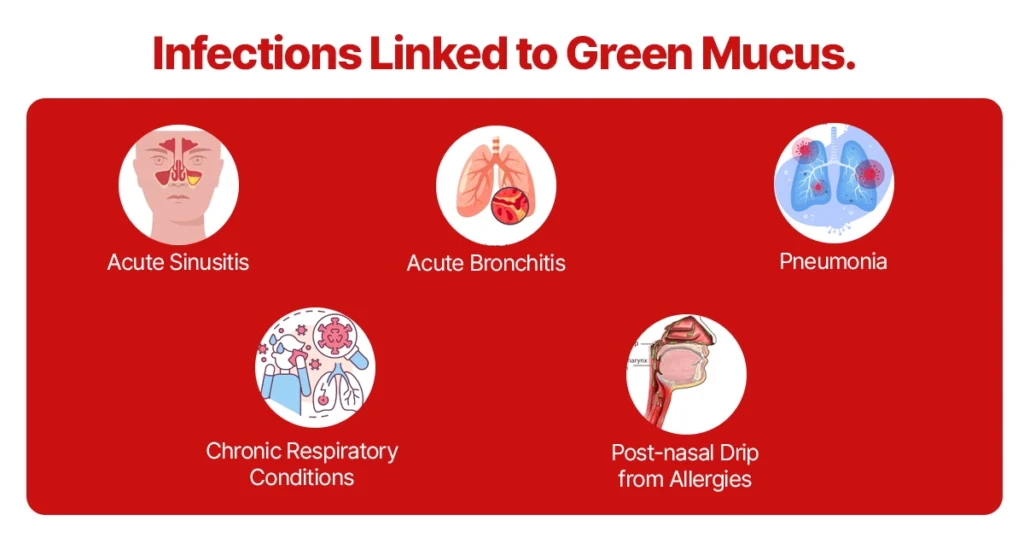
Infections Linked to Green Mucus
- Acute Sinusitis: Inflammation of the sinuses often causes green discharge, facial pressure, and congestion. It can result from viral or bacterial infections. Symptoms that persist longer than a week may require antibiotics or supportive care.
- Acute Bronchitis: This infection affects the bronchial tubes, leading to coughing with greenish thick phlegm and chest discomfort. Most cases are viral and resolve on their own, but bacterial bronchitis may require medical treatment. Monitoring symptom duration and severity is important.
- Pneumonia: Lung infections can produce dark green mucus, accompanied by cough, fever, and shortness of breath. Pneumonia can be serious, particularly in older adults or people with chronic conditions, requiring prompt diagnosis and treatment.
- Chronic Respiratory Conditions: Diseases like COPD or cystic fibrosis can cause persistent greenish thick phlegm due to chronic inflammation and a higher bacterial infection risk. Regular medical care and monitoring help manage flare-ups and prevent complications.
- Post-nasal Drip from Allergies: Allergic inflammation may sometimes produce green discharge without bacterial infection. Mucus accumulation in the back of the throat can cause coughing or irritation, often managed with antihistamines or saline rinses.
Symptoms of Infection Caused by Green Mucus
Green mucus alone isn’t diagnostic. The following symptoms indicate a possible infection and help differentiate viral from bacterial causes:
- Fever or chills.
- Facial pain or sinus pressure.
- Persistent cough lasting more than 10–14 days.
- Wheezing or shortness of breath.
- Fatigue and body aches.
- Sore throat with swelling.
- Worsening nasal congestion.
When to See a Doctor?
If green mucus persists, worsens, or is accompanied by concerning symptoms, seek medical care. Early evaluation helps distinguish viral from bacterial infections and guides appropriate treatment.
- Symptoms lasting more than 10–14 days.
- High fever above 101.5°F.
- Severe headache or intense sinus pressure.
- Trouble breathing or chest pain.
- Signs of dehydration or confusion.
- Persistent coughing with dark green phlegm.
For urgent concerns, contact the Austin Emergency Center.
Treatments for Green Mucus
Treatment depends on the underlying cause. Most cases improve with supportive care, but bacterial infections require targeted therapy.
- Hydration and Fluids: Drinking water thins mucus and supports immune function.
- Nasal Saline Irrigation: Saline rinses or sprays clear nasal passages and relieve congestion.
- Steam Inhalation / Humidifier: Moist air loosens mucus, making it easier to expel.
- Expectorants (e.g., Guaifenesin): OTC medications thin phlegm and ease coughing with greenish mucus.
- Antibiotics: Only prescribed for confirmed bacterial infections; not effective for viral causes.
- Decongestants: Short-term use can alleviate nasal congestion; prolonged use may worsen symptoms.
- Rest and Immune Support: Adequate sleep and nutrition help the body recover from viral illnesses.
- Prescription Medications: Doctors may prescribe antibiotics, steroids, or other therapies tailored to specific infections when complications arise.
Care for Green Mucus at Austin Emergency Center
If you are experiencing green mucus, persistent green phlegm, or coughing with greenish thick phlegm, the Austin Emergency Center provides prompt evaluation and treatment. Our team can help identify whether the cause is viral, bacterial, or due to environmental irritation, ensuring your respiratory system stays healthy. Early attention reduces complications and supports quicker recovery.
If you’re wondering, does green mucus mean infection? Our specialists offer emergency care and treatment plans. Timely assessment can help clear green discharge, manage symptoms effectively, and provide guidance to prevent worsening respiratory issues. Professional care at Austin Emergency Center ensures your lungs and airways get the attention they need.